
On This Day - 21st March
1413 Henry V became King of England. He died, aged 35, at the Château de Vincennes near Paris, apparently from dysentery.
1556England's first Protestant Archbishop of Canterbury, Thomas Cranmer was
burnt at the stake as a heretic, under the Catholic Queen Mary I, also know
as "Bloody Mary". Imprisoned for over two years and under pressure from Church authorities, he apparently reconciled himself with the Roman Catholic Church. However, on the day of his execution, he dramatically recanted these beliefs, to die a heretic to Roman Catholics and a martyr to others. His legacy lives on within the Church of England through the Book of Common Prayer and the Thirty-Nine Articles, an Anglican statement of faith derived from his work.
1646 The Battle of Stow-on-the-Wold (English Civil War), the last major battle of the First Civil War. There is this monument (see 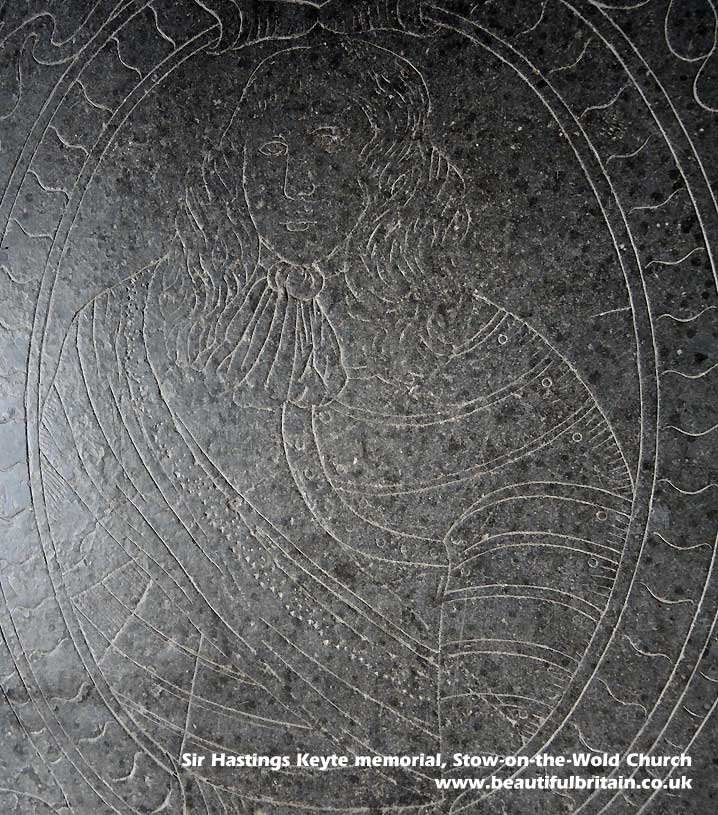 picture) to Sir Hastings Keyte In St. Edward's Church at Stow, Keyte was a Royalist captain killed in the battle, aged 23.
1829The Duke of Wellington, aged 60, fought a bloodless duel with the Earl
of Winchelsea. The reason for the duel was the Duke’s support of Catholic
emancipation. Wellington was both Prime Minister and leader of the Tory Party
at the time.
1835The birth of Thomas Hayward, Cambridgeshire and All-England Eleven cricketer who was generally reckoned to be one of the outstanding batsmen of the 1850s and 1860s. In 1859 he took part in the first ever overseas cricket tour when he was a member of the England team visiting North America.
1918Germany's last major offensive of World War One began on The Somme.
1935The birth of Brian Clough, English footballer and manager of Nottingham Forest from 1975–1993. Clough was widely considered to be one of the greatest managers of the game and the greatest English manager never to have managed the England team.
1945British warplanes destroyed Gestapo headquarters in Copenhagen, killing
over 70 Nazis. The raid also killed civilians, including 86 schoolchildren,
in Denmark's worst civilian disaster of the war.
1945World War II: British troops liberated Mandalay in Burma.
1946Labour politician Aneurin Bevan announced the Government's proposals
for a free National Health Service, paid for by the taxpayer. See  picture of his statue in Cardiff. Doctors immediately
announced the setting-up of a fighting fund to oppose the legislation, fearing
a loss of earnings.
picture of his statue in Cardiff. Doctors immediately
announced the setting-up of a fighting fund to oppose the legislation, fearing
a loss of earnings.
1983The government announced that the first automatic trains on London's
underground could be in operation by early April.
1984Prime Minister Margaret Thatcher came under attack for the breakdown
of negotiations at the common market summit in Brussels. It is understood that Mrs. Thatcher asked for an annual rebate for Britain of £730m but was offered £580m, which she refused.
1990A demonstration in London against the poll tax became a riot. More than
400 people were arrested.
1991The government announced plans for a new property tax in place of the
controversial poll tax.
1997 The death of Wilbert Vere Awdry, Anglican cleric, railway enthusiast, and children's author. Better known as the Reverend W. Awdry, he was the creator of Thomas the Tank Engine, the central figure in his Railway Series. Awdry was born at Ampfield vicarage in Hampshire and his father was vicar of Ampfield Church. See  picture.
1999Ernie Wise, comedian, died aged 73. 'Morecambe and Wise' were a comedy legend for generations of people in Britain. They were honoured with posthumous fellowships at the British Academy Television Awards.
2017The death (aged 86) of Colin Dexter, the English crime writer known for his Inspector Morse series of novels. His characters have spawned a TV series, a sequel series, Lewis, and a prequel series, Endeavour.
2020 Day one of the closure of all the UK's cafes, pubs and restaurants (except for take-away food) in an effort to combat coronavirus. All nightclubs, betting shops, casinos, theatres, cinemas, gyms and leisure centres were also told to close as soon as they reasonably could. The government said the situation would be reviewed each month and that it would pay 80% of wages (up to £2,500 a month) for employees who were not able to work.