
On This Day - 5th August
642 The Battle of Maserfield (now widely identified as Oswestry), between the Anglo-Saxon kings Oswald of Northumbria and Penda of Mercia. The battle ended in Oswald's defeat, death, and dismemberment.
910 The last major Viking army to raid England was defeated at the Battle of Tettenhall by the allied forces of Mercia and Wessex, led by King Edward and Earl Aethelred.
1100 Henry I was crowned King of England in Westminster Abbey.
1305Sir William Wallace, Scottish hero and champion of Scottish independence
who beat Edward I at the battle of Stirling Bridge, was captured by the English
and later executed as a traitor. See 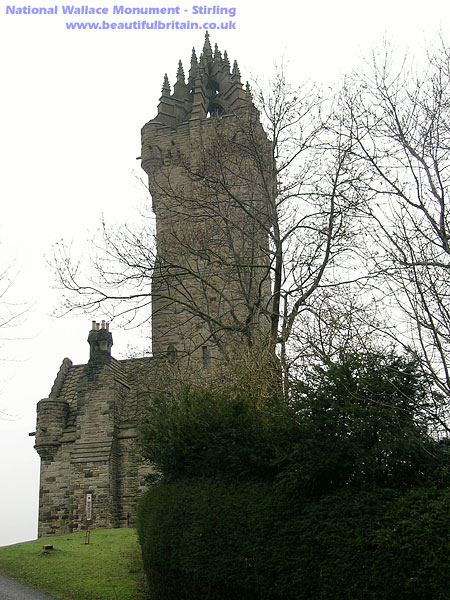 picture of The National Wallace Monument on the outskirts of Stirling. See also the Wallace Monument (
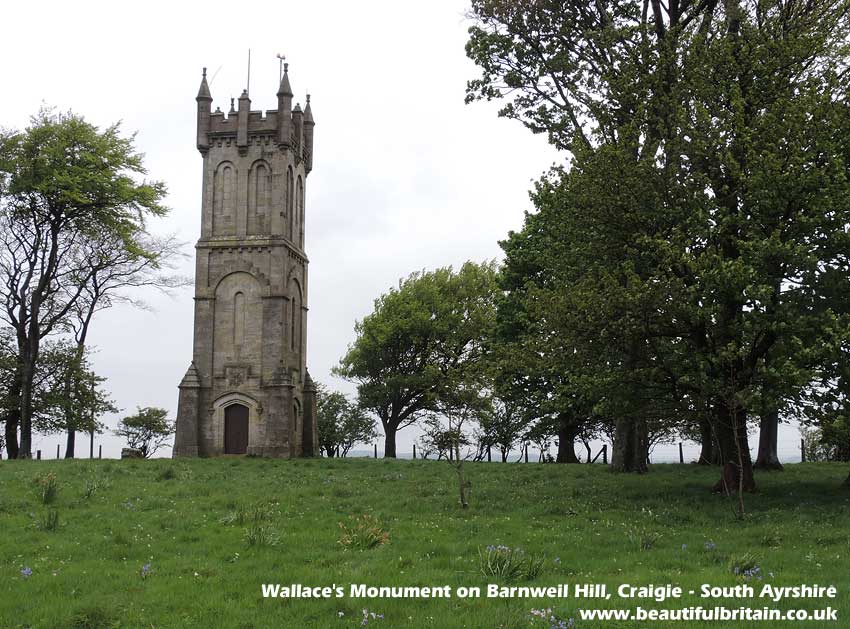 picture) in Craigie, Ayrshire.
1583English soldier and navigator Sir Humphrey Gilbert (half-brother of Sir Walter Raleigh) established the first English colony in North America, at what is now St John's, Newfoundland and claimed it for Elizabeth I.
1620The Mayflower departed from Southampton on its first attempt to reach North America but the sister ship, the Speedwell developed a leak. It had to be refitted at Dartmouth and, after further leaks (or possibly sabotage) the Mayflower made the 60 day crossing alone. See this 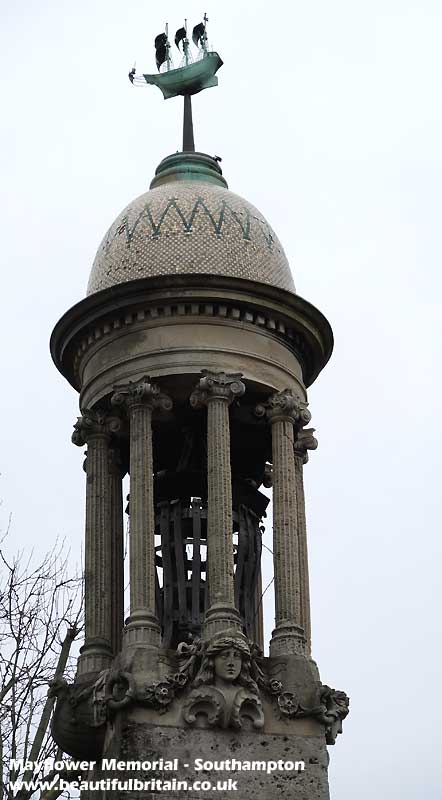 picture of the Mayflower Memorial at Southampton and the plaque -
  picture.
1729The death of Thomas Newcomen. Newcomen created the first practical steam engine for pumping water from tin mines. Prior to his invention, flooding was a major problem, thus limiting the depth at which the mineral could be mined. This Newcomen engine (see 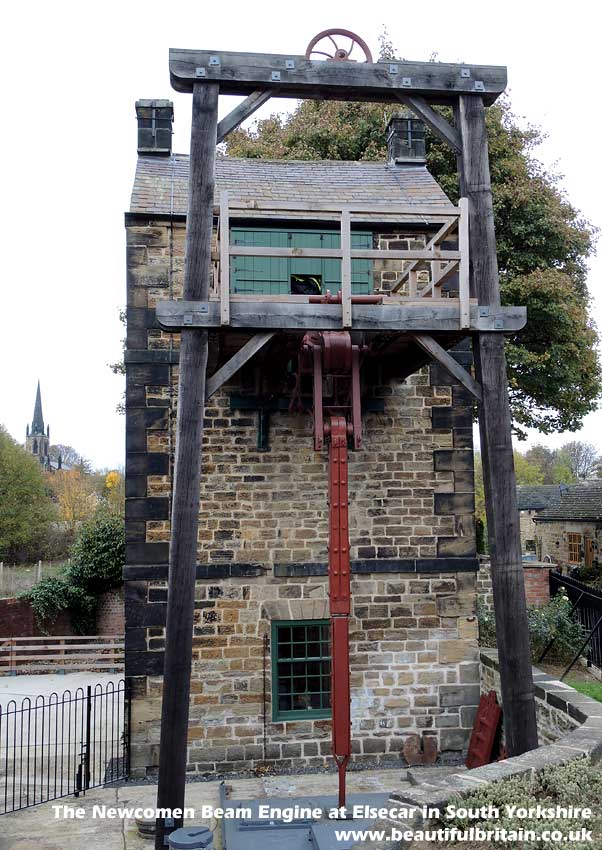 picture) at Elsecar in South Yorkshire was built in 1795 to extract water from the local colliery. It is the only one of its kind in the world to remain in its original location.
1792The death of Lord Frederick North, British Prime Minister whose indecisive leadership
led to the loss of the American colonies.
1816 Francis Ronalds built the first working electric telegraph in his garden on Hammersmith's Upper Mall. He offered his new invention to the Government, who dismissed it as being 'wholly unnecessary'. At this time the government was relying on a visual system (the semaphore) and it took a further 20 years for the electric telegraph to be commercialised. You can find out more about Francis Ronalds and his many other inventions via this link.
1858The first transatlantic cable was officially opened, with Queen Victoria
sending a telegraphic message to US President James Buchanan.
1901Britain's first cinema, the Mohawk, opened in Islington, north London.
Films were accompanied by the 16-piece Fonobian Orchestra. At the height of
their popularity in the 1940s, cinemas in Britain had average weekly attendances
of 30 million.
1925The political party Plaid Cymru was formed with the aim of disseminating knowledge of the Welsh language which was, at the time, in danger of dying out.
1963A Nuclear Test Ban Treaty was signed in Moscow by Russia, the United
States and Britain. Under the treaty, nuclear tests in the Earth's atmosphere,
in space or under the sea were outlawed.
1975Forestry Commission officials announced that Dutch elm disease, which
had attacked more than three million trees in Britain, was spreading.
1976The clock overlooking the Houses of Parliament stopped for
the first time in 117 years.
1983Twenty two members of the IRA were jailed for a total of more than 4,000
years following Northern Ireland's biggest-ever terrorist trial.
1984The death of Richard Burton, Welsh actor, aged 58. Born at Pontrhydyfen, this Richard Burton sculpture (see  picture) is on the Richard Burton Trail in the Afan Forest Park in Neath - Port Talbot
1986Princess Anne rode Gulfland to win the 3.45 at Redcar; her first victory
as a jockey.